


Herbal Supplements vs Vitamins for Perimenopause
Last Updated: 25 October 2026
Quick Summary
The herbal supplements vs vitamins for perimenopause difference is that vitamins correct nutritional shortfalls your body needs to function, while herbs aim to influence specific symptoms such as hot flushes or low mood. Vitamins suit a nutritional gap; herbs suit targeted symptom support, and many women benefit from both when chosen carefully.
- Vitamin D and calcium support bone maintenance as oestrogen falls during perimenopause.
- NHS guidance recommends a daily vitamin D supplement of 10 micrograms for adults.
- Saffron extract has a growing evidence base for low mood and mental fatigue.
- Herbal products can interact with HRT, blood thinners and antidepressants, so check with a pharmacist or GP.
- Look for evidence-led ingredients at meaningful doses and avoid proprietary blends that hide ingredient amounts.
Table of Contents
- Herbal Supplements vs Vitamins for Perimenopause: The Core Difference
- Vitamins for Perimenopause Symptoms: What the Evidence Supports
- Herbal Remedies for Menopause: Benefits and Limitations
- Perimenopause Supplements Safety: What to Check Before You Buy
- Do I Need Supplements During Menopause at All?
- Choosing a Combined Formula: What to Look For
- Find Your Formula with Zourra
- Frequently Asked Questions
Herbal Supplements vs Vitamins for Perimenopause: The Core Difference
The herbal supplements vs vitamins for perimenopause debate comes down to how each works. Vitamins correct or prevent nutritional shortfalls your body needs to function; herbs aim to influence specific symptoms such as hot flushes or low mood. At Zourra, we treat them as two different tools, not rivals.
That distinction matters because it changes what you can reasonably expect. A vitamin D capsule will not cool a hot flush. A black cohosh tablet will not fix a genuine B12 deficiency. Confusing the two is the most common mistake we see.
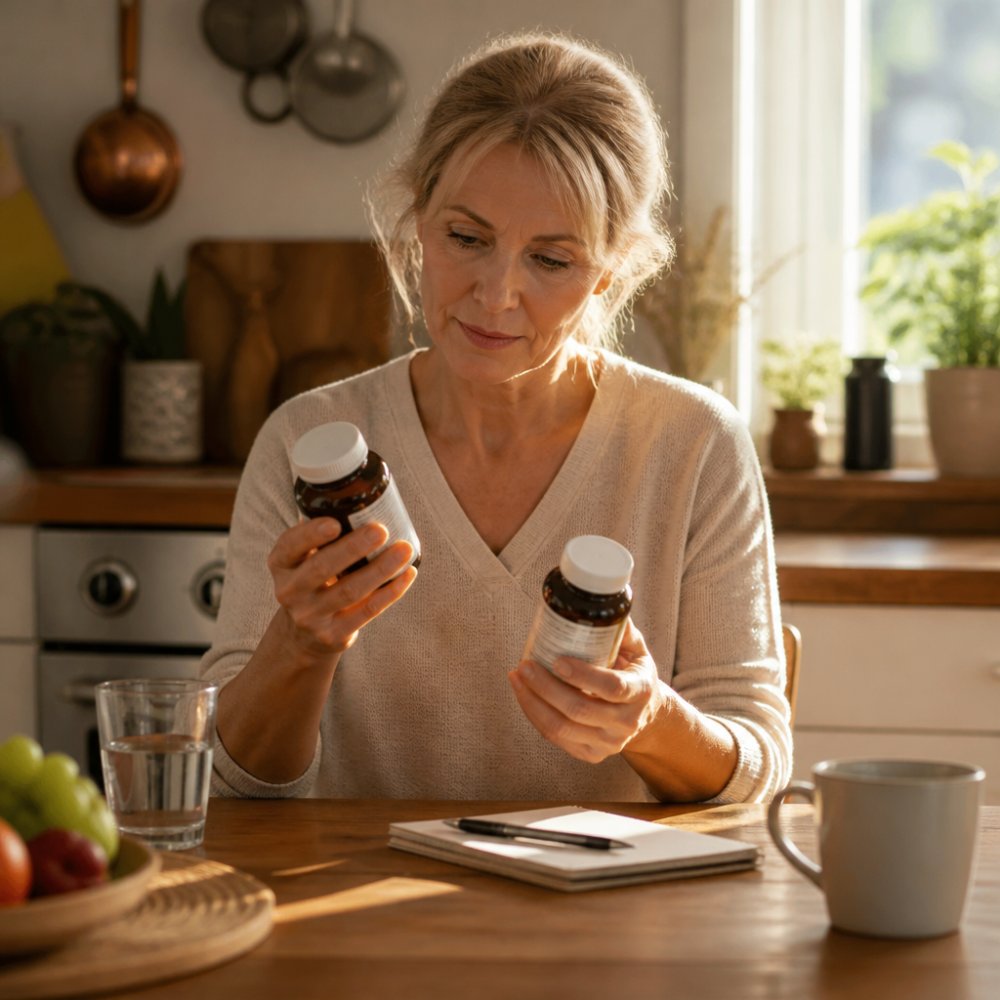
How Each Category Works in the Body
Vitamins are essential nutrients. Your body needs them in small amounts for hundreds of ordinary jobs, from bone maintenance to energy metabolism, and a shortfall produces recognisable symptoms. Herbal remedies contain plant compounds that may act on the nervous system, blood vessels or hormonal signalling. The evidence base for most herbs is thinner and more mixed than for vitamins, which is why we advise reading both categories with the same scepticism.
A Quick Comparison at a Glance
| Feature | Herbal Supplements | Vitamins and Minerals |
|---|---|---|
| Primary aim | Ease specific symptoms | Correct nutrient shortfalls |
| Evidence base | Mixed, varies by herb | Strong for known deficiencies |
| Regulated as | Food supplements | Food supplements |
| Best for | Hot flushes, mood, sleep | Bone health, energy, deficiency risk |
| Main risk | Interactions with medicines | Excess dosing, interactions |
Vitamins for Perimenopause Symptoms: What the Evidence Supports
Vitamins for perimenopause symptoms are best judged against a simple test: does the nutrient address something your body genuinely needs more of at this stage? For a few nutrients, the answer is a clear yes.
Vitamin D, Calcium and Bone Health
Oestrogen helps protect bone, and as it falls during perimenopause, bone loss accelerates. Vitamin D and calcium both contribute to the maintenance of normal bones, and the NHS guidance on vitamin D recommends a daily supplement of 10 micrograms for adults, particularly through autumn and winter. This is the strongest case in the whole vitamins-versus-herbs discussion.
B Vitamins, Magnesium and Energy
B vitamins contribute to normal energy-yielding metabolism, and magnesium supports normal muscle and nervous system function. Neither is a magic fix for fatigue, but a shortfall will make tiredness worse. If you want a gentle, highly absorbable form, our magnesium bisglycinate is bound to glycine to go easy on the gut.

Herbal Remedies for Menopause: Benefits and Limitations
Herbal remedies for menopause appeal because they promise symptom relief without hormones. Some, like saffron, have a growing evidence base for mood and mental fatigue. Others, like black cohosh, show mixed results across trials.
Saffron, Black Cohosh and Red Clover
Saffron extract has drawn interest for low mood and psychological symptoms, and it is one of the botanicals in our Focus Complex. Black cohosh is traditionally used for hot flushes, though trial results vary. Red clover contains isoflavones, plant compounds that weakly mimic oestrogen, and may help some women with flushes. If you are weighing herbal options against HRT more broadly, our guide to natural alternatives to HRT for perimenopause covers the fuller picture.
Where Herbal Falls Short
Herbs rarely fix a deficiency, and they are not a substitute for prescribed treatment. Quality also varies enormously between products, so check for a standardised extract and a stated amount of the active compound. Watch out: buying unregulated imports online risks taking a product with no verified content at all.
Perimenopause Supplements Safety: What to Check Before You Buy
Perimenopause supplements safety starts with one question: what else are you taking? Herbal products can interact with prescription medicines, including HRT, blood thinners and antidepressants. Always check with a pharmacist or GP before combining anything new with existing medication.
Harmony Complex Hormone Support Supplement →
Interactions with HRT and Prescription Medicines
Some herbs affect how the liver processes drugs, which can change how well a medicine works. If you take HRT or regular prescriptions, our guide to menopause supplements safe with medication walks through what to check before you buy. Look for a clear ingredient list, a UK manufacturer, and third-party testing.
Do I Need Supplements During Menopause at All?
Not everyone does. If you eat a varied diet, get regular daylight and have no symptoms that trouble you, a supplement may add little. Supplements earn their place when there is a specific gap: low vitamin D, a restricted diet, or symptoms that affect daily life. If fatigue is your main concern, our guide to supplements for menopause fatigue helps you decide whether they are worth it.
Choosing a Combined Formula: What to Look For
A combined formula saves you juggling bottles, but only if it is built sensibly. Look for evidence-led ingredients at meaningful doses, highly absorbable forms, and a UK manufacturer operating to GMP standards. Avoid proprietary blends that hide how much of each ingredient you actually get.
Our Harmony Complex is a balanced daily formulation of vitamins and botanicals designed to support hormone regulation and overall wellness, contributing to normal psychological function, normal bones, normal muscle function and normal immune function.

Find Your Formula with Zourra
The right choice depends on your symptoms, your diet and your medication, not on which category sounds more natural. Vitamins suit a nutritional gap; herbs suit specific symptom support. Many women benefit from both, chosen carefully.
At Zourra, we make UK-made, science-backed supplements for women over 40, formulated with evidence-led ingredients and covered by a 90-day guarantee. Get started with Zourra and find a formula built around how you actually feel.
Frequently Asked Questions
Are herbal supplements or vitamins better for perimenopause?
Neither category is universally better. Vitamins address specific nutritional gaps, such as vitamin D for bone maintenance and B vitamins for energy metabolism, while herbal remedies target symptoms like low mood and disrupted sleep through plant compounds. Many women benefit from combining both, which is why perimenopause supplements that pair vitamins with botanicals, such as Zourra's Harmony Complex, are popular. The right choice depends on your symptoms, your diet and any medicines you take.
Can herbal supplements interact with HRT or other medicines?
Yes. Some herbal remedies can interact with hormone-based treatments and certain prescription medicines. Always tell your GP or pharmacist about every supplement you take, and check the label for interaction warnings. If you are on HRT, get advice before adding any herbal product to your routine.
How can you tell whether a menopause supplement is safe?
Look for clear labelling that lists every ingredient and its dose, a UK-based manufacturer, and evidence of GMP-certified production. Avoid products listing proprietary blends that hide individual amounts. Check whether the formula has been designed for women over 40 and whether the brand offers a guarantee. If you have health conditions or take medication, run the ingredient list past your GP or pharmacist before starting.
Do you need supplements during perimenopause?
Not everyone does. A varied diet covers most nutrient needs, but perimenopause raises demand for certain nutrients, especially vitamin D and calcium for bone density as oestrogen falls. If you experience brain fog, fatigue or poor sleep despite eating well, a targeted formula can help fill gaps. Think of supplements as support, not a replacement for medical care. Speak to your GP if symptoms are severe or affecting daily life.
Can you take vitamins and herbal supplements together?
In most cases yes, and many combined formulas are built around this. The key is avoiding duplicate doses, particularly of fat-soluble vitamins like D and K2, which accumulate in the body. Check the labels of everything you take so you do not exceed recommended amounts. A combined product such as Focus Complex, which pairs vitamins B6, D3 and K2 with saffron extract, removes the guesswork of stacking separate bottles.

