


Best Supplements for Menopause Fatigue: 2026 Guide
Table of Contents
- Quick Comparison: Best Supplements for Menopause Fatigue
- How We Evaluated These Menopause Fatigue Supplements
- 1. Harmony Complex Hormone Support Supplement
- 2. Vitality Complex Daily Energy Supplement
- 3. Magnesium Bisglycinate
- Vitamins for Menopause Brain Fog: What to Look For
- How to Manage Menopause Fatigue Day to Day
- Which Supplement Fits Your Symptoms?
- Frequently Asked Questions
Last Updated: September 27, 2026
Quick Comparison: Best Supplements for Menopause Fatigue
If you are searching for the best supplements for menopause fatigue, the most effective options combine bioavailable nutrients that support energy metabolism, hormonal balance, and sleep quality. This guide from Zourra compares three targeted formulations, each designed to address a different root cause of menopausal tiredness.
The three products below are not interchangeable. One supports hormone regulation, one targets cellular energy production, and one focuses on rest and recovery. Choosing correctly depends on whether your fatigue stems from hormonal fluctuation, poor sleep, or nutritional gaps.
| Supplement | Price | Primary Focus | Best For | Key Actives |
|---|---|---|---|---|
| Harmony Complex | £39.00 | Hormone regulation | Mood swings, bone health | Vitamins and botanicals |
| Vitality Complex | £39.00 | Energy and fatigue reduction | Persistent daytime tiredness | 9 active ingredients plus vitamin C |
| Magnesium Bisglycinate | £23.00 | Rest and recovery | Poor sleep, muscle tension | Magnesium bound to glycine |
How We Evaluated These Menopause Fatigue Supplements
We assessed each formula against four criteria: ingredient bioavailability, evidence for the claimed benefit, gentleness on the digestive system, and value for a full course. Bioavailability matters most. A nutrient in its active form is absorbed more readily than a cheap oxide or carbonate, which is why magnesium bisglycinate outperforms magnesium oxide for most women.


We also checked whether each product addresses the specific mechanisms behind menopausal fatigue rather than offering a generic multivitamin. NHS guidance on menopause symptoms notes that fatigue during this transition often has multiple drivers, including disrupted sleep, hormonal shifts, and low iron or B12. A supplement that ignores these drivers will disappoint.
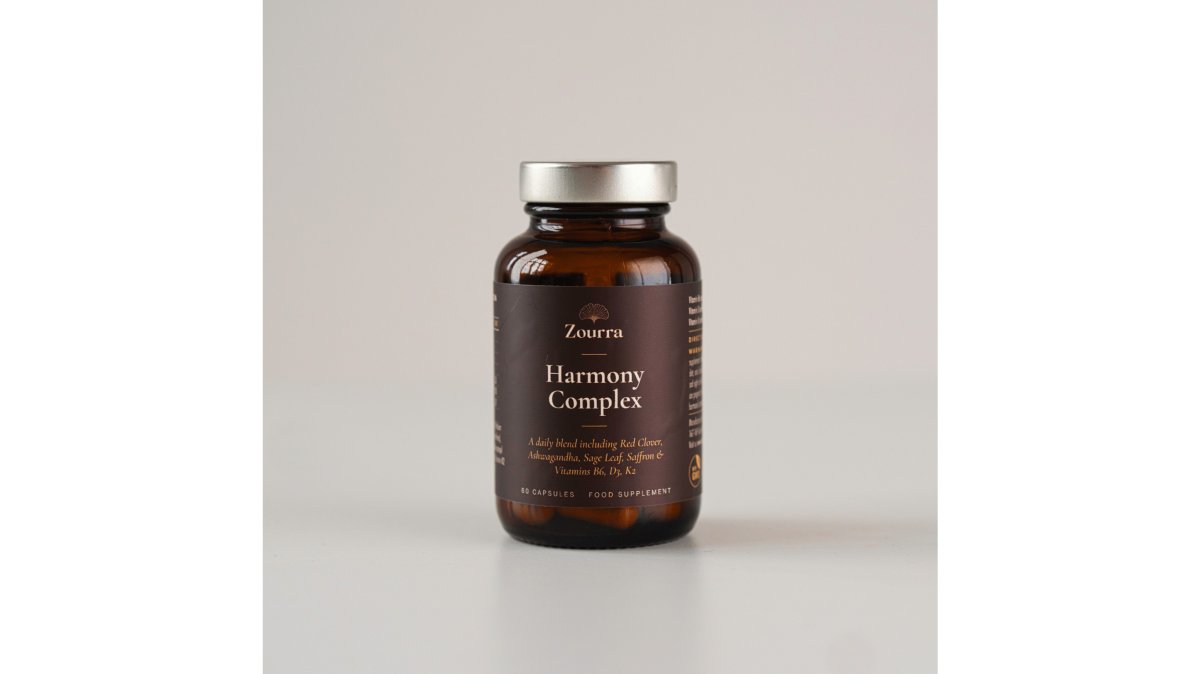
1. Harmony Complex Hormone Support Supplement
Harmony Complex is our top pick for women whose fatigue is tangled up with mood swings, irritability, and hormonal turbulence. This daily formulation combines vitamins and botanicals to support hormone regulation and overall wellness.
Key Ingredients and How They Help
The formula supports normal psychological function, which matters because low mood drains energy as effectively as poor sleep. It also contributes to the maintenance of normal bones and normal muscle function, and supports the normal function of the immune system. For women in their fifties watching bone density, that combination is practical rather than decorative.
Pros and Cons
What works: it targets the hormonal root of fatigue rather than masking the symptom. The bone and muscle support is a genuine bonus for long-term health.
Where it falls short: it is not a quick fix for a bad night's sleep. If your tiredness is purely sleep-related, magnesium may suit you better.
2. Vitality Complex Daily Energy Supplement
Vitality Complex is the strongest choice for persistent daytime tiredness that no amount of coffee shifts. It uses nine active ingredients paired with vitamin C for increased absorption, combining nutrients in their most bioavailable forms.

Key Ingredients and How They Help
The formulation contributes to the reduction of tiredness and fatigue, supports normal energy-yielding metabolism, and helps normal oxygen transport in the body. It also supports the normal formation of red blood cells, which is directly relevant if your GP has flagged low iron or borderline anaemia as a contributor to your exhaustion.
Pros and Cons
What works: it addresses fatigue at the metabolic level, and the vitamin C pairing improves absorption of the active nutrients.
Where it falls short: it will not fix fatigue caused by hormonal imbalance alone. Pair it with a hormone-supporting formula if mood is also a factor.
3. Magnesium Bisglycinate
Magnesium Bisglycinate suits women whose fatigue traces back to broken sleep and muscle tension. It provides a gentle, highly bioavailable form of magnesium bound to glycine for easy absorption.
Key Ingredients and How They Help
This non-hormonal formula supports normal muscle and nervous system function, normal psychological function, normal energy-yielding metabolism, and the maintenance of normal bones. Because it is gentle on the gut, it fits easily into a daily routine without the digestive upset that cheaper magnesium forms can cause.
Pros and Cons
What works: it is the most affordable option at £23.00 and the gentlest on digestion.
Where it falls short: magnesium alone will not address hormonal swings. It works best as part of a broader routine.
Vitamins for Menopause Brain Fog: What to Look For
Vitamins for menopause brain fog should prioritise B vitamins, magnesium, and vitamin C, because these support the nervous system, energy metabolism, and neurotransmitter function. Brain fog and fatigue usually travel together, so a formula that addresses one often helps the other.
Look for active forms rather than bulk fillers. Magnesium bisglycinate absorbs better than magnesium oxide. B vitamins in their methylated forms are more usable by the body. British Menopause Society resources recommends discussing persistent cognitive symptoms with a clinician, since thyroid issues and low B12 can mimic menopausal brain fog.
How to Manage Menopause Fatigue Day to Day
Managing menopause fatigue day to day means stabilising blood sugar, protecting sleep, and moving your body without overdoing it. Supplements help, but they work best alongside habits that support the same systems.
- Eat protein with every meal to avoid the afternoon energy crash
- Keep a consistent sleep and wake time, even at weekends
- Aim for 20 to 30 minutes of daylight exposure in the morning
- Reduce alcohol, which fragments sleep in the second half of the night
- Strength train twice a week to support muscle and bone
Which Supplement Fits Your Symptoms?
Match the supplement to your dominant symptom rather than guessing. If mood swings and irritability lead your fatigue, Harmony Complex is the logical first step. If you wake exhausted and drag through the afternoon, Vitality Complex targets that pattern directly.
For sleep disruption and muscle tension, Magnesium Bisglycinate is the gentlest starting point. Many women find that a combination of two products covers more ground than any single formula, and it is reasonable to introduce one at a time so you can tell what is working.
Frequently Asked Questions
Which vitamin is best for menopause fatigue?
There is no single best vitamin, but certain nutrients are more relevant for menopause fatigue. B vitamins, particularly B12 and folate, support normal energy-yielding metabolism and red blood cell formation. Vitamin C aids absorption of other nutrients. Magnesium supports normal muscle and nervous system function. A formulation combining these, such as Vitality Complex, addresses tiredness and fatigue through multiple pathways rather than relying on one ingredient.
Can supplements really help with menopause exhaustion?
Supplements can help if they contain ingredients with recognised roles in energy metabolism and fatigue reduction. For example, magnesium contributes to normal energy-yielding metabolism, and B vitamins support the reduction of tiredness and fatigue. They are not a cure for hormonal changes, but they can fill nutritional gaps that worsen exhaustion. Always check with your GP before starting anything new, especially if you take other medications.
How long does menopause fatigue last?
Menopause fatigue varies widely. Some women experience it mainly during perimenopause, while others find it persists into postmenopause. The duration depends on factors like sleep quality, stress, underlying health conditions, and hormonal fluctuations. There is no fixed timeline, but tracking your symptoms and discussing them with your GP can help you identify patterns and manage them more effectively.
What should I look for in a menopause supplement for energy?
Look for ingredients with evidence for reducing fatigue and supporting energy metabolism. Magnesium bisglycinate is gentle on the gut and supports normal energy-yielding metabolism. B vitamins and vitamin C are also relevant. Check that the formula is designed for women over 40 and made in UK facilities with GMP certification. Avoid products that promise overnight results or rely on proprietary blends without clear ingredient amounts.
When should I see a GP about menopause fatigue?
See your GP if fatigue is severe, persistent, or affecting your daily life. Also book an appointment if you notice unusual symptoms like shortness of breath, heart palpitations, or significant mood changes. Your GP can check for underlying conditions such as anaemia or thyroid issues, review your medications, and discuss whether hormone replacement therapy or other treatments might help alongside supplements.
Menopause fatigue rarely has a single cause, which is why a targeted approach beats a generic multivitamin. Zourra formulates UK-made, science-backed supplements for women over 40, with a 90-day guarantee and GMP-certified manufacturing behind every batch. Start with Harmony Complex for hormonal support, Vitality Complex for daily energy, or Magnesium Bisglycinate for rest and recovery. Find your formula and give your body the support it has been missing.
