


What to Take for Menopause Anxiety: A 2026 Guide
Table of Contents
- Why Menopause Anxiety Happens
- What to Take for Menopause Anxiety: Your Options
- Natural Supplements for Menopause Anxiety: What the Evidence Says
- Lifestyle Changes for Perimenopause Anxiety
- When to See a GP for Menopause Symptoms
- Potential Side Effects and Interactions
- Building a Routine That Works for You
- Frequently Asked Questions
Last Updated: September 18, 2026
Why Menopause Anxiety Happens
Menopause anxiety is the heightened worry, irritability and racing thoughts many women experience as oestrogen levels fall during perimenopause and menopause. It is not "just stress" and it is not a character flaw. It is a hormonal shift with real effects on the brain.
Oestrogen helps regulate serotonin and cortisol, the chemicals that steady your mood and your stress response. When oestrogen drops, that steadying influence weakens. Sleep breaks up. Hot flushes interrupt your nights. And the result often feels like anxiety that arrives from nowhere.
This guide from Zourra walks through what actually helps, from prescribed treatments to natural supplements for menopause anxiety, and how to tell when you need a GP.
What to Take for Menopause Anxiety: Your Options
Your options fall into two main groups: prescribed treatments from your GP, and natural supplements for menopause anxiety that you can buy yourself. Many women use both.
The table below summarises the main routes, so you can see where each one fits.
| Option | Best For | How It Works | Needs a GP? |
|---|---|---|---|
| HRT | Moderate to severe symptoms | Replaces falling hormones | Yes |
| Talking therapy | Persistent worry and low mood | Changes thought patterns | Referral or self-referral |
| Magnesium | Poor sleep and tension | Supports nervous system function | No |
| Botanical blends | Hormonal balance support | Plant extracts plus vitamins | No |
| Lifestyle changes | Everyday symptom control | Exercise, sleep, diet, routine | No |
Prescription Treatments and HRT
Hormone replacement therapy (HRT) replaces some of the oestrogen your body has stopped making. For many women it eases anxiety, mood swings and night sweats at the same time.
Your GP can offer HRT as tablets, patches, gels or sprays. Patches and gels are often preferred because they deliver oestrogen through the skin.
Antidepressants are another option when anxiety is the dominant symptom. Your GP may suggest a talking therapy such as CBT alongside either treatment, which is often more effective than medication alone.
Natural Supplements for Menopause Anxiety
Natural supplements for menopause anxiety work best as support, not as a replacement for medical care. The two most useful types are magnesium and botanical blends.
Magnesium supports normal nervous system function and normal psychological function. The bisglycinate form is gentle on the gut and easy to absorb, which matters if you take it nightly.
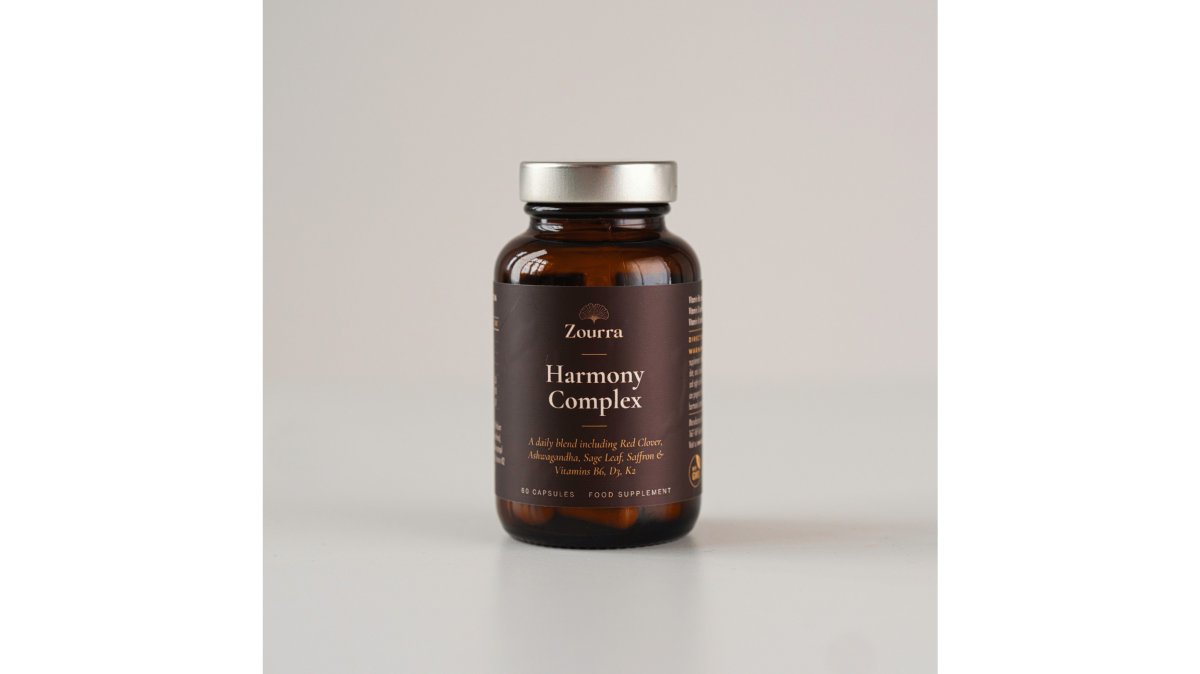
Botanical blends combine plant extracts with vitamins to support hormonal balance and steady mood. Zourra's Harmony Complex is one example, formulated with vitamins and botanicals to support hormone regulation and normal psychological function.

Natural Supplements for Menopause Anxiety: What the Evidence Says
The honest answer is that supplement evidence is mixed. Magnesium has the strongest footing, with studies linking it to better sleep and lower tension. Botanical ingredients show promise, but results vary between women.
What matters most is quality and dose. A cheap blend with tiny amounts of active ingredients will not do much.
- Check the ingredient forms, not just the names
- Look for magnesium bisglycinate rather than magnesium oxide
- Choose UK-made products from GMP certified facilities
- Give any supplement at least eight to twelve weeks
Lifestyle Changes for Perimenopause Anxiety
Lifestyle changes for perimenopause anxiety are the foundation everything else sits on. No supplement outperforms poor sleep, no exercise and four coffees a day.

Start with movement. A brisk 30-minute walk most mornings lifts mood and burns off adrenaline. Strength work twice a week supports bones and energy.
Then look at the basics:
- Keep a consistent bedtime, even at weekends
- Cut caffeine after midday
- Limit alcohol, which disrupts sleep and worsens flushes
- Eat protein with every meal to steady blood sugar
- Try five minutes of slow breathing when worry spikes
When to See a GP for Menopause Symptoms
Book an appointment when symptoms affect your sleep, work or relationships for more than a few weeks. That is the point where self-help stops being enough.
Go sooner if you notice any of these:
- Anxiety that stops you leaving the house
- Persistent low mood or loss of interest
- Palpitations, chest pain or breathlessness
- Thoughts of harming yourself
Your GP can check thyroid function and iron levels, which can mimic menopause symptoms. They can also discuss HRT, antidepressants and talking therapies. The NHS guidance on menopause symptoms and treatment is a useful starting point before your appointment.
Potential Side Effects and Interactions
Every treatment carries some risk, and supplements are no exception. Magnesium is generally well tolerated, but high doses can cause loose stools. Botanical blends can interact with thyroid medication, blood thinners and some antidepressants.
Tell your GP and your pharmacist about everything you take, including supplements. This matters most if you are on medication for blood pressure, diabetes or thyroid conditions.
Building a Routine That Works for You
A routine beats willpower. Pick two changes, do them for a month, then add one more.
Here is a simple starting structure:
- Morning: 30-minute walk, protein-rich breakfast
- Afternoon: no caffeine, one glass of water every two hours
- Evening: magnesium an hour before bed, screens off by 10pm
- Weekly: two strength sessions, one check-in on how you feel
Track your sleep and mood in a notebook for four weeks. Patterns show up fast, and you will know what is working. Zourra's guidance on supporting hormonal balance naturally covers how to build this kind of routine around your symptoms.
If you want targeted support, Zourra's Harmony Complex (£39.00) and Magnesium Bisglycinate (£23.00) are both made in the UK and designed for women over 40. Every order comes with a 90-day guarantee, so you can try a full cycle before deciding.
Frequently Asked Questions
Is anxiety a common symptom of perimenopause?
Yes. Anxiety is one of the most frequently reported psychological symptoms of perimenopause, alongside low mood and irritability. Falling and fluctuating oestrogen levels affect the brain's regulation of mood, and disrupted sleep from night sweats can make anxious feelings worse. Many women notice anxiety for the first time in their forties, even without a prior history. If anxiety is interfering with work, relationships or sleep, it is worth discussing with your GP rather than assuming you have to push through it.
Can natural supplements for menopause anxiety really help?
Some ingredients used in natural supplements for menopause anxiety have evidence behind them. Magnesium supports normal psychological function and nervous system function, while certain botanicals are traditionally used to support hormonal balance during the transition. Supplements are not a replacement for medical treatment, but they can form part of a wider approach alongside lifestyle changes and, where appropriate, prescribed options. Look for formulas with clearly listed, evidence-led ingredients and check with your GP or pharmacist if you take other medication.
When should I see a GP about menopause anxiety?
See your GP if anxiety is affecting your daily life, sleep or ability to work, if symptoms are new or suddenly worse, or if you feel low for most of the day over several weeks. You should also seek help if you have thoughts of harming yourself. A GP can confirm whether perimenopause or menopause is likely, rule out other causes such as thyroid problems or anaemia, and discuss treatment options including HRT, talking therapies and lifestyle support. There is no need to wait until symptoms become severe.
What lifestyle changes reduce anxiety during the menopause transition?
Regular movement, even a 20-minute walk most days, helps regulate stress hormones and improve sleep. Cutting back on caffeine and alcohol can reduce palpitations and night waking. A consistent bedtime routine and a cooler bedroom help with night sweats. Breathing exercises and talking therapies such as CBT have good evidence for anxiety. Keeping a simple symptom diary for a few weeks also helps you and your GP spot patterns and judge whether any changes are working.
Menopause anxiety rarely resolves on its own, and guessing at what to take wastes months you could spend feeling better. Zourra makes UK-made, evidence-led supplements for women over 40, including Harmony Complex for hormonal balance and Magnesium Bisglycinate for rest and recovery, both backed by a 90-day guarantee. Get started with Zourra and find the formula that fits your symptoms.
