


How to Stop Perimenopause Night Sweats: 7 Proven Steps
Table of Contents
- Why Perimenopause Night Sweats Happen and What Triggers Them
- Perimenopause Night Sweats Remedies You Can Start Tonight
- How to Sleep With Night Sweats Without Waking Drenched
- Night Sweats Menopause Treatment: From GP Options to Supplements
- How Long Do Perimenopause Night Sweats Last?
- Common Mistakes That Make Night Sweats Worse
- When to Speak to Your GP About Night Sweats
- Frequently Asked Questions
Last Updated: October 12, 2026
Why Perimenopause Night Sweats Happen and What Triggers Them
Waking up soaked at 3am is one of the most common reasons women seek help for perimenopause night sweats. The cause is falling and fluctuating oestrogen, which disrupts the part of your brain that controls body temperature.
Your thermostat becomes oversensitive. A small rise in room heat, a spicy meal, or a stressful day can push your body into a full cooling response. That response is the sweat.
At Zourra, we hear the same story again and again: women who slept well for decades suddenly wake drenched, then lie awake for an hour. Understanding the trigger is the first step to controlling it.
Common triggers include:
- A bedroom above 18°C
- Alcohol in the evening
- Caffeine after midday
- Spicy food at dinner
- Synthetic bedding that traps heat
- Stress and anxiety
Perimenopause Night Sweats Remedies You Can Start Tonight
Most perimenopause night sweats remedies work best when you combine a few small changes rather than relying on one. Start with your bedroom, then look at what you eat and drink in the evening.
Cooling Your Bedroom and Bedding
Aim for a bedroom between 16°C and 18°C. This is the range most sleep specialists suggest for comfortable rest.
Switch to breathable cotton or bamboo sheets. Layer light blankets instead of one heavy duvet, so you can remove a layer without getting up.
A bedside fan pointed at your upper body helps during a flush. Keep a cool glass of water within reach.
Foods and Drinks That Trigger Flushes
What you eat in the evening shapes how you sleep. Alcohol is the biggest culprit for most women. It widens blood vessels and raises skin temperature within hours.
Try these swaps:
- Swap the evening glass of wine for sparkling water
- Move your last coffee to before 2pm
- Eat spicy food at lunch, not dinner
- Add a small protein snack before bed to steady blood sugar
NHS guidance on menopause symptoms and treatment
How to Sleep With Night Sweats Without Waking Drenched
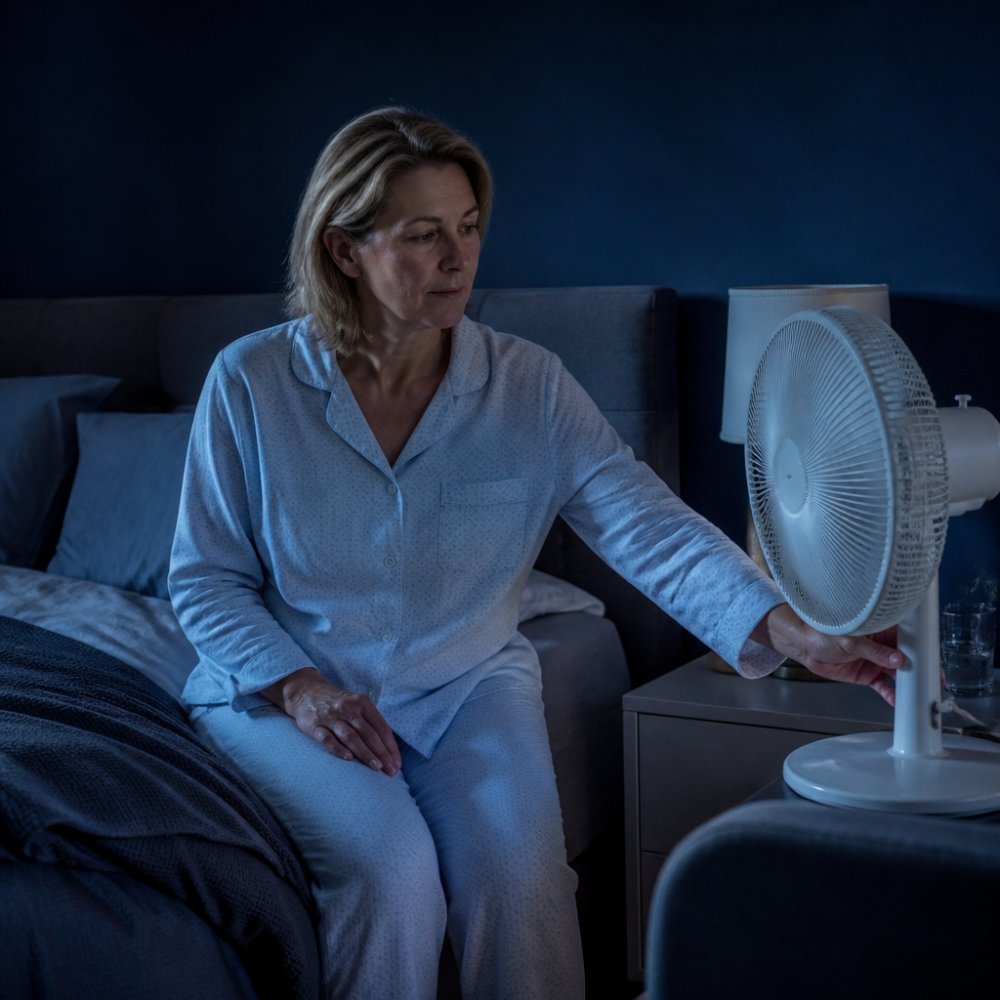
Learning how to sleep with night sweats comes down to preparation before bed and a calm response when a flush hits. The goal is to cool down fast, so you can fall back asleep.
Keep these by your bed:
- A spare set of pyjamas
- A small towel
- A cool flannel in a bowl of water
- A water bottle
If you wake drenched, change your top and turn on the fan. Do not lie in damp sheets. Damp fabric keeps you warm and makes the next flush more likely.
Magnesium supports normal muscle and nervous system function, and many women find it helps with rest and recovery. Our Magnesium Bisglycinate is a gentle, highly absorbable form that fits easily into an evening routine.

Night Sweats Menopause Treatment: From GP Options to Supplements
Night sweats menopause treatment ranges from lifestyle changes to prescription medicine, depending on how much your symptoms affect daily life. Your GP can talk through the options and help you weigh the risks and benefits.
Treatment options include:
- Hormone replacement therapy (HRT), which replaces falling oestrogen
- Non-hormonal prescription medicines for flushes
- Cognitive behavioural therapy (CBT) for sleep and mood
- Lifestyle changes, such as cooling and trigger avoidance
- Supplements that support hormonal balance and sleep
Supplements are not a replacement for medical treatment. But many women use them alongside other steps.
Our Harmony Complex is a daily formulation of vitamins and botanicals designed to support hormone regulation and overall wellness. It contributes to normal psychological function and the maintenance of normal bones.
Harmony Complex Hormone Support Supplement →

NHS overview of hormone replacement therapy
How Long Do Perimenopause Night Sweats Last?
Most women find night sweats ease within a few years, but the timeline varies widely. Some notice them for two to four years. Others have them for longer, especially if they start early in perimenopause.
The pattern is rarely steady. You may have weeks of calm, then a return of flushes. Tracking your symptoms helps you spot what makes them worse.
Speak to your GP if symptoms last more than a year or start to affect your sleep, mood, or work.
| Stage | Typical Pattern | What Helps Most |
|---|---|---|
| Early perimenopause | Occasional flushes, mild | Cooling, trigger tracking |
| Mid perimenopause | Frequent, often nightly | Bedding, magnesium, GP review |
| Late perimenopause | Can peak before periods stop | HRT discussion, CBT |
| Post-menopause | Often eases over time | Ongoing sleep habits |
Common Mistakes That Make Night Sweats Worse
The biggest mistake is treating night sweats as a bedding problem alone. If you only change your sheets and ignore alcohol, stress, and hormones, the flushes keep coming.
Other common errors:
- Sleeping in thick, synthetic nightwear
- Drinking alcohol to "help" sleep
- Keeping the bedroom warm for a partner
- Skipping meals, which spikes blood sugar
- Ignoring stress, which triggers flushes
- Stopping a routine before it has time to work
A common mistake is expecting a single fix to solve everything overnight. Give any change at least two to three weeks before judging it.
When to Speak to Your GP About Night Sweats
Book a GP appointment if night sweats disrupt your sleep most nights, affect your mood or work, or come with other worrying symptoms. Your GP can rule out other causes and discuss treatment.
Bring a symptom diary. Note when flushes happen, what you ate, and how you slept. This makes the appointment far more useful.
NHS guidance on when to see a GP about menopause
Your GP can also advise on whether supplements are safe alongside any medicine you take. Always check before starting something new.
Night sweats can make you feel like you have lost control of your own sleep. You have not. Small, consistent changes to your bedroom, your evening habits, and your daily support can make a real difference.
At Zourra, we make UK-made, evidence-led supplements for women over 40. Our Harmony Complex supports hormonal balance, and our Magnesium Bisglycinate supports rest and recovery. Both come with our 90-day guarantee.
Find your formula and start sleeping better.
Frequently Asked Questions
What helps stop night sweats during perimenopause?
Cooling your bedroom to around 16-18°C, wearing moisture-wicking cotton nightwear, and avoiding alcohol, caffeine and spicy food in the evening can reduce how often you wake drenched. Magnesium bisglycinate supports normal nervous system function, which many women find helps them settle. For persistent symptoms, speak to your GP about hormone replacement therapy or other prescription options.
How long do perimenopause night sweats last?
Most women experience night sweats for around four to seven years during perimenopause, though this varies widely. Some notice them fade within two years, while others continue into early postmenopause. Tracking your symptoms over a few months helps you spot patterns and gives your GP useful information if you decide to seek treatment.
When should I speak to a GP about night sweats?
Book an appointment if night sweats disrupt your sleep most nights, affect your work or mood, or come with weight loss, a persistent cough or a fever. These extra symptoms need checking because they can point to something other than perimenopause. Your GP can also discuss HRT, clonidine or other treatments if lifestyle changes are not enough.
Can lifestyle changes reduce perimenopause night sweats?
Yes. Cutting alcohol and caffeine, keeping your bedroom cool, choosing breathable bedding, and managing stress through gentle exercise or breathing techniques can all reduce how often night sweats happen. A daily magnesium supplement such as Magnesium Bisglycinate supports normal muscle and nervous system function, which many women find helps them sleep more soundly through the night.
