


Feel vs Vitabiotics for Menopause: Which Is Right?
Table of Contents
- Feel vs Vitabiotics for Menopause: The Quick Comparison
- Key Ingredients and Benefits: Feel vs Vitabiotics
- Menopause Supplements for Anxiety: What Each Brand Offers
- Menopause Supplement Safety and Interactions to Check
- Menopause Supplements and HRT: Can You Take Both?
- How Long to Take Menopause Supplements Before You Judge Them
- Pros and Cons: Feel vs Vitabiotics
- Frequently Asked Questions
Last Updated: October 17, 2026
Feel vs Vitabiotics for Menopause: The Quick Comparison
Choosing between Feel vs Vitabiotics for menopause comes down to formulation philosophy: Feel builds short, focused blends around a handful of evidence-led ingredients, while Vitabiotics spreads a wider net across vitamins, minerals and botanicals. This guide from Zourra breaks down what sits inside each range, how the two brands differ on anxiety support and safety, and which type of woman each one tends to suit.
Both brands are well established and widely stocked, so the decision is less about reputation and more about match. One woman wants a lean formula she can audit ingredient by ingredient. Another wants broad nutritional coverage in a single tablet.
That distinction matters more than any marketing claim. Below, we compare ingredients, anxiety support, safety considerations, HRT compatibility and realistic timelines, so you can judge each option against your own symptoms rather than a generic checklist.
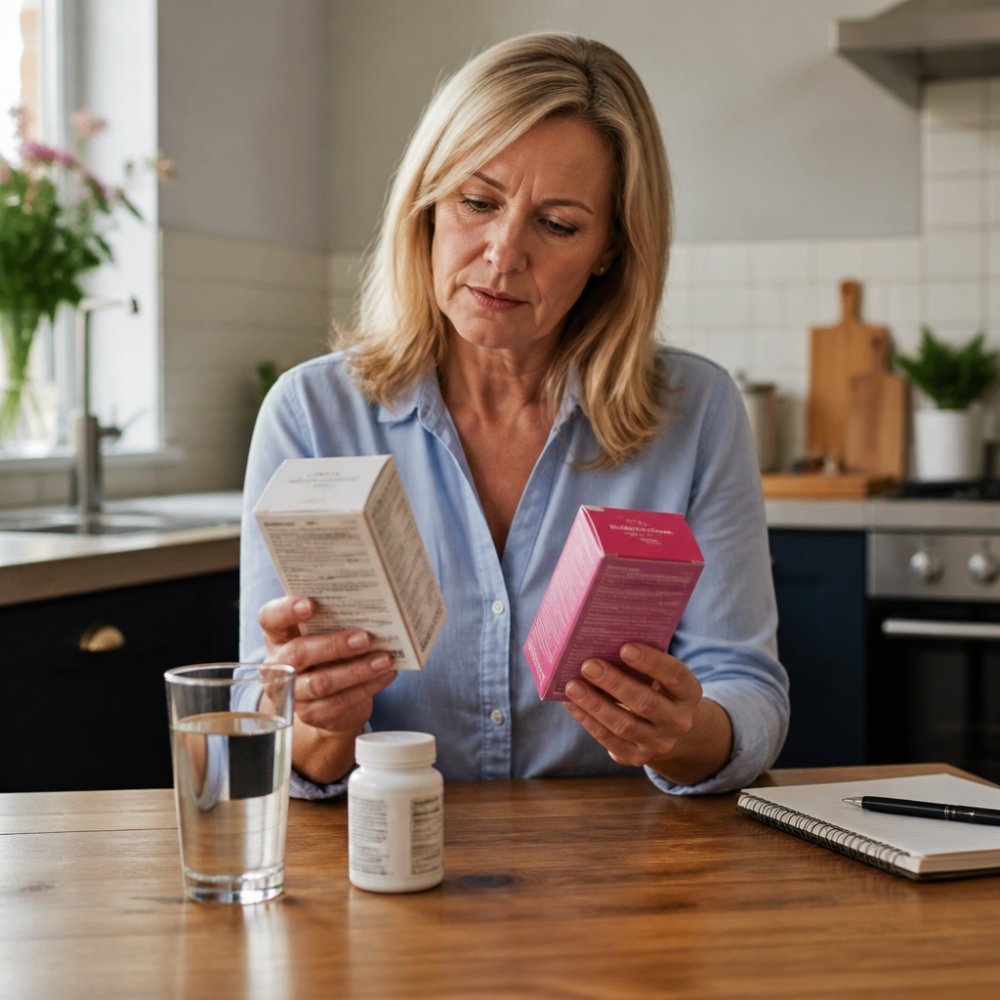
| Feature | Feel | Vitabiotics |
|---|---|---|
| Formulation style | Short, focused blends | Broad multinutrient coverage |
| Typical ingredients | Vitamins, minerals, selected botanicals | Vitamins, minerals, soy isoflavones, botanicals |
| Anxiety-focused options | Dedicated calm and mood formulas | General multinutrient ranges |
| Subscription model | Yes, recurring delivery | No, buy as needed |
| Best for | Women who want a lean, auditable formula | Women who want all-round nutritional backup |
Key Ingredients and Benefits: Feel vs Vitabiotics
The real difference between these two brands comes down to ingredient density. Feel keeps its menopause formulas deliberately narrow, pairing a small number of vitamins and minerals with targeted botanicals. Vitabiotics takes the opposite approach, packing broader multinutrient profiles into its menopause-facing products.
What Feel Puts in Its Menopause Supplement
Feel's menopause range centres on a compact blend of vitamins, minerals and plant extracts chosen for symptom support. You will typically find B vitamins for energy and psychological function, vitamin D and calcium for bone maintenance, and botanicals such as sage or soy isoflavones depending on the specific product. The appeal is transparency: short ingredient lists are easier to cross-check against your own needs and any medication you take.
What Vitabiotics Puts in Its Menopause Supplement
Vitabiotics builds its menopause products around a wide multinutrient base. Expect a full spectrum of vitamins and minerals alongside soy isoflavones and selected botanicals, aimed at covering general nutritional gaps during the transition. If you want one tablet doing several jobs, that breadth is the selling point. If you prefer to isolate specific ingredients, it can feel like overkill.
Menopause Supplements for Anxiety: What Each Brand Offers
Menopause supplements for anxiety vary widely in what they actually contain, and neither brand treats anxiety as a clinical condition. Feel offers formulas built around magnesium, B vitamins and calming botanicals, positioned to support normal psychological function. Vitabiotics folds similar nutrients into broader multinutrient products rather than selling a standalone anxiety blend.
Here is the honest framing: no supplement treats an anxiety disorder. What evidence-led ingredients can do is support normal nervous system function as part of a wider approach. If anxiety is significantly affecting your daily life, speak to your GP before relying on any supplement.
For readers who want a single daily formula built specifically around hormonal balance and psychological function, our Harmony Complex Hormone Support Supplement is formulated with that goal in mind, contributing to normal psychological function alongside bone and muscle support.

Menopause Supplement Safety and Interactions to Check
Menopause supplement safety and interactions deserve more attention than most buyers give them. Both Feel and Vitabiotics use vitamins, minerals and botanicals that are generally well tolerated, but "natural" does not mean risk-free. Soy isoflavones, for instance, can interact with thyroid medication and hormone therapies, and high-dose vitamin blends may duplicate what you already take elsewhere.
Run through this checklist before starting either brand:
- List every prescription, over-the-counter medicine and existing supplement you take
- Check for overlapping ingredients, especially vitamin D, calcium and B vitamins
- Confirm whether soy isoflavones are appropriate for your medical history
- Speak to your GP or pharmacist if you take thyroid, blood-thinning or hormone medication
- Introduce one new product at a time so you can identify any reaction
The NHS guidance on supplements and vitamin safety is a sensible starting reference, and your pharmacist can screen for interactions in minutes.
Menopause Supplements and HRT: Can You Take Both?
Menopause supplements and HRT can often be taken together, but the decision should involve your GP or menopause specialist. There is no blanket prohibition, yet some ingredients warrant caution. Soy isoflavones and certain botanicals may interact with hormone treatments, and duplicated vitamins need checking.
The practical approach is sequencing. Tell your clinician exactly which supplement you plan to use, at what dose, and why. Bring the packaging. Most GPs will happily review a short ingredient list, and it takes far less time than guessing.
Harmony Complex Hormone Support Supplement →
If you are already on HRT and want nutritional support for energy, sleep or bone health, a focused formula is usually easier to review than a broad multinutrient. Fewer ingredients mean fewer variables for your clinician to assess.
How Long to Take Menopause Supplements Before You Judge Them
How long to take menopause supplements before judging results is typically eight to twelve weeks. Nutritional status builds gradually, and botanicals need consistent daily use to show any effect. Stopping after a fortnight tells you nothing except that you spent money quickly.
Set a fair test:
- Take the product daily at the same time for at least eight weeks
- Track two or three specific symptoms in a simple notes app
- Avoid changing three other things at once, or you will not know what worked
- Review at the twelve-week mark with your GP if nothing has shifted
A common mistake is judging a supplement during a particularly stressful month and blaming the product. Baseline matters. Record how you feel before you start, so you have something honest to compare against.
Pros and Cons: Feel vs Vitabiotics
Weighing Feel vs Vitabiotics fairly means acknowledging that both have genuine strengths and real limitations. Neither is universally better; the right pick depends on whether you value focus or breadth.
Feel: pros and cons
- Pros: Short, auditable ingredient lists; dedicated formulas for specific concerns such as mood and sleep; subscription convenience with recurring delivery.
- Cons: The subscription model suits some and irritates others; narrower formulas may leave nutritional gaps if your diet is already poor; less all-round coverage than a full multinutrient.
Vitabiotics: pros and cons
- Pros: Broad multinutrient coverage in a single product; widely available on the high street; strong heritage in UK supplement manufacturing.
- Cons: Long ingredient lists are harder to audit; soy isoflavones are not suitable for everyone; less targeted if you have one dominant symptom.
For a third path, Zourra's Harmony Complex Hormone Support Supplement, at £39.00, sits between the two: a balanced daily formulation of vitamins and botanicals designed to support hormone regulation, normal psychological function, bone maintenance and immune function, made in the UK and backed by a 90-day guarantee.
Frequently Asked Questions
Is Feel or Vitabiotics better for menopause?
Neither is universally better; they suit different priorities. Feel's menopause supplement is a targeted formula with a broader blend of botanicals and vitamins, while Vitabiotics offers well-established, widely available options at a lower price point. Compare the ingredient doses against your main symptoms, check for interactions with any medication, and consider whether you want a single menopause-specific product or a general multivitamin. If neither matches your needs, a formula such as Zourra's Harmony Complex at £39.00 is another option to weigh up.
Do menopause supplements help with anxiety?
Some ingredients used in menopause supplements for anxiety, such as magnesium and certain B vitamins, contribute to normal psychological function, but they are not a treatment for anxiety. If anxiety is significant or persistent, speak to your GP, because talking therapies and other support are available. Supplements may sit alongside that support rather than replace it. Look for products that state their vitamin and mineral content clearly so you know what you are taking.
How long should you take a menopause supplement before assessing its effects?
Most manufacturers suggest allowing around three months of consistent daily use before judging results, because nutritional effects build gradually. Keep a simple symptom diary covering sleep, energy and mood so you can compare weeks objectively rather than relying on memory. If you notice no change after three months, or you experience side effects at any point, stop and speak to a pharmacist or GP.
Can you take menopause supplements alongside HRT?
Many women do take supplements alongside HRT, but you should confirm it is appropriate for you with your GP or pharmacist first. Some herbal ingredients can interact with medication or affect how it is processed, and the combination has not been studied for every product. Bring the actual supplement packaging to your appointment so the ingredients can be checked. Never adjust your HRT dose to accommodate a supplement without medical advice.
Whichever brand you lean toward, the harder challenge is matching a formula to your actual symptoms rather than a label. At Zourra, we build UK-made, evidence-led supplements for women over 40, with focused formulas, GMP-certified manufacturing and a 90-day guarantee so you can test one properly. Find your formula and give it the full eight to twelve weeks it deserves.
